How Much Water Do You Need for Camping?
Wondering how much water to bring camping? This simple guide explains how to calculate water for drinking, cooking, and cleaning so you can plan your camping trip without running out of water.
Kat Culler
5/4/20263 min read
Affiliate Disclosure: This post contains affiliate links. This means I may earn a small commission—at no extra cost to you—if you choose to purchase through my links. I only recommend products I genuinely trust and use.
Introduction
One of the easiest mistakes beginners make when camping is not bringing enough water. At home, water is always available. When you're camping, especially at campgrounds without hookups, you need to plan ahead.
The good news is that figuring out how much water to bring camping is actually pretty simple once you know a basic rule. Bringing enough water makes cooking easier, cleaning easier, and the entire trip more comfortable.
If you're new to camping, my Ultimate Beginner's Camping Guide is a great place to start before planning water and food.
1. The Simple Rule for Camping Water
A good rule to follow is:
Bring 1 gallon of water per person per day.
This usually covers:
Drinking
Cooking
Brushing teeth
Washing hands
Light dish rinsing
If the weather is hot, you’re hiking a lot, or you won’t have water available at your campsite, plan for a little more.
2. Quick Water Planning Examples
Here are a few easy examples to help you plan:
1 Person - 2 Nights - 3 Gallons
2 People - 2 Nights - 6 Gallons
2 People - 3 Nights - 8-9 Gallons
Family of 4 - 2 Nights - 10-12 Gallons
It’s always better to bring a little extra if you have room in the car.
If you’re still learning how to plan your trips, check out my guide on how to plan a camping trip for beginners.
3. When You Should Bring Extra Water
Some trips require more water than others. You may want to bring extra water if:
It’s hot outside
You’re hiking during the day
You’re cooking most meals at camp
The campground does not have water
You want to wash dishes fully
You want to rinse off gear or shoes
You’re camping with kids or dogs
In these situations, plan for 1.5 gallons per person per day instead of 1 gallon.
4. Easy Ways to Bring Water Camping
You don’t need anything fancy to bring water camping. Some easy options include:
Gallon jugs from the grocery store
Refillable water containers
5-gallon water jugs
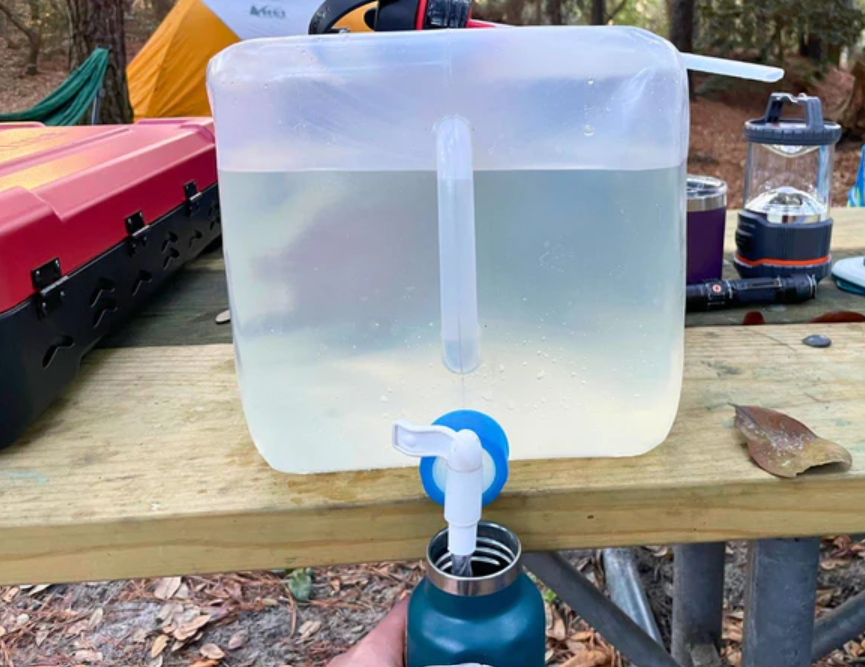
Collapsible water containers
Reusable water bottles for daily use
Many campers bring one large container for camp and individual water bottles for drinking and hiking.
If you're building out your gear slowly, my Car Camping Checklist covers the basic gear you actually need.
5. Simple Tips That Make Camping Water Easier
A few small things can make managing water at camp much easier:
Freeze one gallon jug to use as ice in your cooler
Keep a small water jug on the picnic table for hand washing
Bring a separate jug just for drinking water
Don’t rely on campground water unless you confirm it’s available
Always bring more water than you think you need
Running out of water is one of the fastest ways to make a camping trip stressful, so it’s worth planning ahead.
If you want to make your campsite setup easier overall, these car camping organization ideas can help keep everything simple and organized.
Final Thoughts
Water planning is one of the most important parts of any camping trip, but it doesn’t need to be complicated.
If you remember one thing from this article, remember this:
Plan for 1 gallon of water per person per day and you’ll be in good shape for most camping trips.
Camping becomes much more relaxing when you don’t have to worry about running out of water, so plan ahead, bring enough, and keep camping simple.
And if you're planning meals for your trip, check out these easy camping breakfast ideas to make your mornings at camp simple and stress-free.
Keep Camping Simple
Camping doesn’t need to be complicated. A few thoughtful choices make all the difference.
Want Simple Camping Tips Each Month?
Once a month, I send one short email with practical tips, comfort upgrades, and easy planning ideas.
No clutter. Just simple camping.