Affiliate Disclosure: This post contains affiliate links. This means I may earn a small commission—at no extra cost to you—if you choose to purchase through my links. I only recommend products I genuinely trust and use.
Introduction
If you’re dreaming of fresh air, cozy campfires, and peaceful nights under the stars—but you’re not sure where to start—car camping is the perfect entry point. It’s affordable, accessible, beginner-friendly, and doesn’t require tons of expensive gear. Whether you want a quick weekend escape or you're planning a bigger trip, this guide will walk you through everything you need to feel ready, confident, and excited for your first camping adventure.
This guide is packed with practical advice, budget-friendly gear recommendations, and simple tips to help you avoid common beginner mistakes. Let's get you outside—without the overwhelm.
What Is Car Camping?
Car camping simply means you drive directly to your campsite and set up—no backpacking or long hikes required. You can:
Bring more comfort items
Pack heavier gear
Keep essentials stored in your vehicle
Create a cozy campsite without feeling cramped
It’s the easiest, most popular way to start camping.
Why Car Camping Is Perfect for Beginners
Car camping is ideal if you're new to outdoor adventures because:
✔ It’s low-stress
You can pack plenty of blankets, food, and gear—and if you forget something, your car is right there.
✔ It’s affordable
You can slowly build your camping gear collection over time.
✔ It’s flexible
You can camp at established campgrounds, dispersed locations, or scenic state parks.
✔ It’s comfortable
Sleeping pads, pillows, coolers, camp chairs—bring it all!
If you want to make your first trip even easier, check out these 25 Car Camping Hacks for Beginners.
Essential Car Camping Gear (Beginner-Friendly Checklist)
Not sure what to bring? My Car Camping Checklist breaks down everything you need for a stress-free trip.
Want a printable version? The Simple Camp Beginner Camping Checklist makes packing easier and helps you keep track of the essentials.
You don’t need to spend a fortune—or buy everything at once. Start with the basics:
Shelter + Sleeping
These items make the biggest difference in comfort:
1. Tent
Look for a 2- to 4-person tent for beginners; it gives you space to move around.
Features to look for:
Easy setup
Good ventilation
Waterproof rainfly
2. Sleeping Bag
Choose one rated for 20–40°F, depending on your climate
3. Sleeping Pad or Air Mattress
A thick, insulated sleeping pad or air mattress makes a huge difference in warmth and comfort.
4. Pillows & Extra Blankets
You can use pillows from home—no need for fancy camping pillows at first.
Same with blankets! Bring them from home to put under or over your sleeping bag.
If you’re considering sleeping inside your vehicle, here’s a complete guide on how to sleep in your car comfortably and safely.
Cooking + Food Storage
Your first camping kitchen can be incredibly simple:
1. Cooler
A reliable cooler keeps food safe and fresh for the weekend.
2. Camp Stove
A single-burner or two-burner propane stove is the easiest to use.
3. Water Jug
Bring at least 1–2 gallons per person per day.
I use this 5 gallon water jug & it works great for 2 people over a weekend.
4. Cooking Gear
Start with:
One pot
One skillet
Spatula
Tongs
Plates & utensils
Insulated mug for coffee
Dish soap + scrubber
5. Food Storage
Zip bags, containers, or reusable silicone bags are perfect for keeping food organized.
Comfort + Extras
Camp chairs
Foldable table (if campground doesn’t have one)
Lantern or headlamp
Fire starter
Trash bags
First aid kit
Portable power bank
Sunscreen & bug spray
Tin Foil
Coffee Maker (pour over, AeroPress, instant coffee)
Paper Towels
Toilet Paper
How to Choose the Right Campsite
Your campsite choice can make or break your trip. Look for:
✔ Drive-up access
Avoid hike-in sites until you gain confidence.
✔ Amenities
Beginners should start with campgrounds that include:
Restrooms
Water sources
Picnic tables
Fire pits
Defined parking areas
✔ Booking Options
Use websites like:
ReserveAmerica
Hipcamp
Plan early—weekends fill up fast. Especially holiday weekends!
How to Set Up Your Campsite (Step-by-Step)
Park on level ground
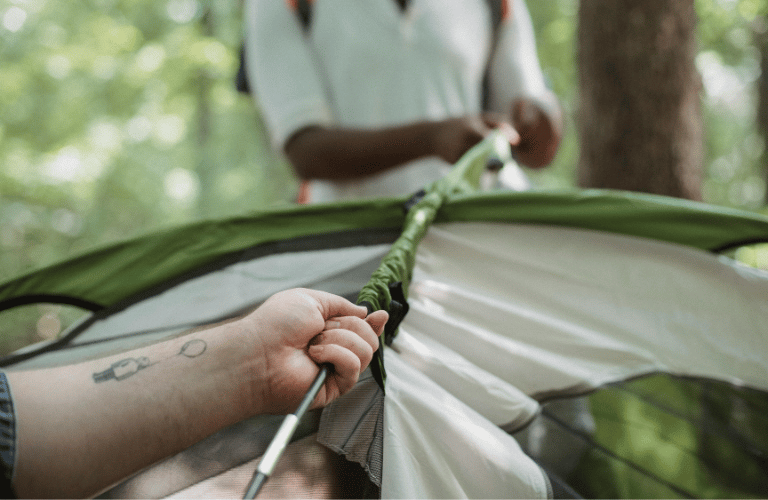
Set up your tent first
Clear out any sticks, pinecones or large rocks where you will setup your tent
Organize your sleeping area
Set up chairs & cooking area
Store food safely
If there is a bear box, use it!
Keep a clean campsite
Setup a trash bag by tying it to a picnic table or tree so it doesn't spill out. At night, be sure to put the trash in your vehicle to avoid attracting animals (put it in the trunk or floorboard).
Pro Tip: Set up your tent at home once before your trip. It helps you avoid frustration later.
What to Eat While Camping (Beginner Meals)
Simple meal ideas:
Breakfast
Overnight oats
Breakfast burritos
Yogurt + fruit
Coffee!
Lunch
Sandwiches
Wraps
Chips + dips
Dinner
Tacos
Pasta
Hot dogs or veggie dogs
Burgers
Pre-marinated chicken + veggies
Pro Tip: The more you can prep ahead of time at home, the easier & better it will be a the campground.
Snacks
Trail mix
Fruit
Granola bars
S’mores
Need simple ideas for camp meals? Try these easy camping meals for beginners that require almost no prep.
Car Camping Safety Tips
Know local wildlife guidelines
Keep food locked in your car or bear locker
Don’t leave fires unattended
Tell someone where you’re going
Download offline maps on your phone
Learn campground quiet hours
How to Stay Warm at Night
Wear base layers
Use insulated sleeping pads
Add extra blankets
Keep a pair of dry socks for bedtime
Avoid cotton at night (it traps moisture)
Staying warm can make or break your trip—here’s my guide on how to stay warm while car camping, even in chilly weather
Common Mistakes Beginners Make
Avoid these and you’ll already be ahead of most campers:
Overpacking
Arriving at camp too late
Forgetting to check the weather
Bringing too much food
Not testing gear beforehand
Leaving trash or food out overnight
For even more helpful tips, here are 10 things I wish I knew before my first car camping trip.
Sample Packing List for Your First Trip
A quick glance packing list:
Tent
Sleeping bag + pad/air mattress
Pillows
Camp stove + fuel
Cooler
Paper towels
Hand Sanitizer
Food + snacks
Camp chairs
Lantern/headlamp
Clothing layers
Toiletries
Toilet Paper
Trash bags
Firewood (you can usually buy this at the campsite or nearby)
Final Thoughts
Car camping is one of the simplest, most enjoyable ways to reconnect with nature. With just a few essentials, a little planning, and the right mindset, your first trip will be memorable for all the right reasons. As you get more comfortable, you can expand your gear, explore new locations, and discover what style of camping feels best for you.
Camping doesn’t have to be complicated—sometimes the simplest trips are the ones that bring the most joy.