Camping with Dogs: A Beginner’s Guide to Bringing Your Pup Car Camping
Everything you need to know to keep your dog safe, comfortable, and happy on your next outdoor trip
Kat Culler
12/5/20254 min read
Affiliate Disclosure: This post contains affiliate links. This means I may earn a small commission—at no extra cost to you—if you choose to purchase through my links. I only recommend products I genuinely trust and use.
Introduction
Camping with your dog is one of the best ways to enjoy the outdoors. Whether you’re heading to a national forest or a local campground, bringing your pup along adds fun, companionship, and adventure to your trip. But dogs have unique needs when they’re away from home—especially when it comes to safety, comfort, and sleeping arrangements.
This beginner’s guide covers everything you need to know to ensure a smooth, stress-free dog-friendly camping experience.
If you’re brand new to camping in general, my Ultimate Beginner’s Guide to Car Camping is a great starting point before planning a dog-friendly trip.
1. Check Pet Rules Before You Go
Not all campgrounds or parks are dog-friendly, and some have strict rules.
Before booking, confirm:
Are dogs allowed?
Are there leash requirements?
Are dogs allowed on trails?
Are there breed or size restrictions?
Are certain areas off-limits (like beaches or buildings)?
National Forests and BLM land are usually more flexible than National Parks, which often restrict dogs to paved areas.
2. Pack a Dog-Specific Camping Gear Bag
A dedicated dog bag makes packing easier and ensures you don’t forget anything.
Include:
Leash & backup leash
Harness
Waste bags
Food & treats
Collapsible food/water bowls
Blanket or dog bed
Towel (for muddy paws or wet fur)
Medications
Doggy first aid items
A small storage bin or duffel works perfectly for keeping everything organized.
And if you’re packing for yourself too, here’s my Car Camping Checklist with all the essentials for a smooth trip.
3. Bring Enough Food and Clean Water
Dogs often burn more energy while camping from exploring, walking, and being outdoors all day.
Tips:
Pack extra food just in case
Bring plenty of clean drinking water
Keep food sealed to avoid wildlife interest
Don’t rely on natural water sources—they can carry bacteria
If your dog has a sensitive stomach, changing environments can add stress—stick to their regular food.
And while you’re planning your Human meals, here are some easy camping meals for beginners that are simple to prep at camp.
4. Use a Leash or Tie-Out System at Camp
Even well-behaved dogs can get overwhelmed, overstimulated, or excited in new environments.
A tie-out cable or long lead helps your dog enjoy freedom while staying safe. Make sure your dog:
Can’t reach your campfire
Isn’t able to wander into other campsites
Doesn’t get tangled around trees or furniture
A harness is better than a collar for long tie-outs.
For quick tips that make any camping trip easier, here are 25 Car Camping Hacks for Beginners.
5. Keep Your Dog Comfortable at Night
Just like you, your dog needs warmth and coziness to sleep well.
Good options for sleeping setups:
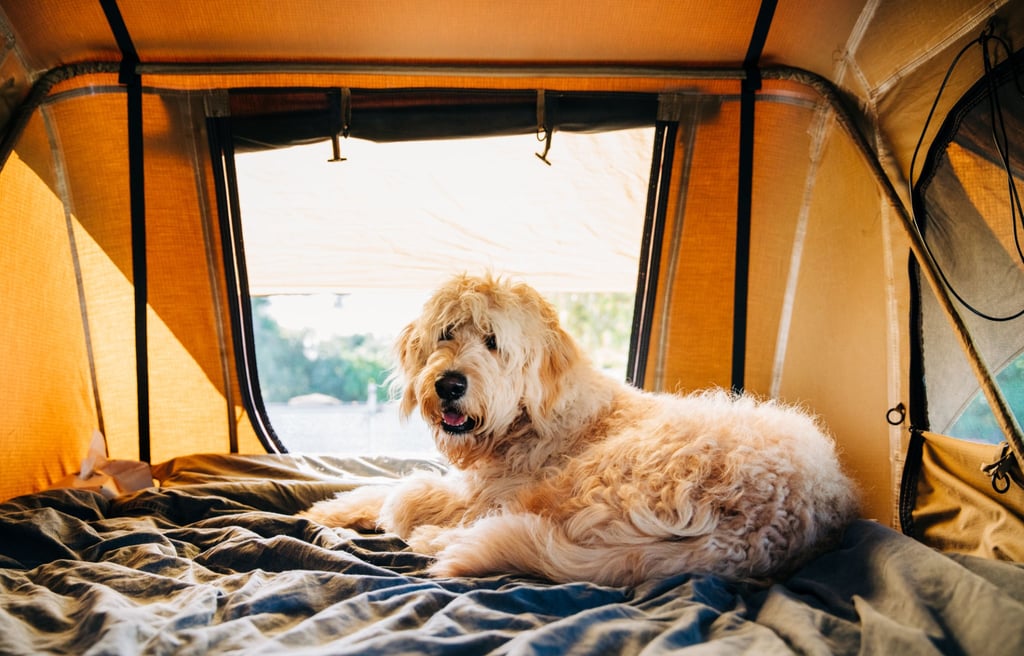
Inside your tent (best choice)
A dog bed or blanket inside the tent
A sleeping bag designed for dogs
Your car if they prefer a closed, small space
Cold nights can affect your dog even more than you—bring an extra blanket or insulated dog jacket if temperatures drop.
Cold nights can be challenging for both humans and dogs — here’s how to stay warm while car camping. If you prefer sleeping inside your vehicle, here’s a full guide on how to sleep in your car comfortably and safely.
6. Protect Your Dog’s Paws
Rough terrain, hot sand, or sharp rocks can hurt your dog’s paws.
Bring:
Booties for rough terrain
Paw balm to protect pads
Tweezers in case of thorns
Booties take practice—let your dog try them at home first to get comfortable.
7. Watch for Heat or Cold Stress
Dogs don’t regulate temperature the same way humans do.
Signs of overheating:
Excessive panting
Lethargy
Drooling
Red gums
Signs of being too cold:
Shivering
Curling tightly
Refusing to lie down on cold surfaces
Cooling mats or dog jackets help a ton in extreme temperatures.
8. Keep Your Dog Safe Around Wildlife
Dogs can accidentally provoke wildlife or get hurt if they’re too curious.
Best practices:
Keep them close when hiking
Avoid letting them sniff holes or dens
Secure food and scented items
Never leave your dog unattended at camp
Coyotes, porcupines, snakes, and bears can all be risks depending on your area.
9. Plan Dog-Friendly Activities
A tired dog is a happy (and well-behaved) dog.
Fun camping activities for pups:
Short hikes
Swimming
Fetch in open safe areas
Sniff walks around camp
Relaxing in the shade
Avoid intense hikes if your dog isn’t used to them—start slow.
10. Clean Up After Your Dog
Leaving dog waste behind is harmful to wildlife and water sources. Always pack it out in sealed bags or deposit it in campground trash bins.
Keep waste bags easily accessible—one roll in the car, one in the tent, and one in your daypack.
What If Your Dog Is Nervous or New to Camping?
Some dogs take time to adjust. Help them feel safe by:
Bringing familiar blankets or toys
Giving them space away from crowds
Comforting them during loud noises
Keeping routines as normal as possible
If your dog has anxiety, start with short, simple one-night trips before big weekend adventures.
Final Thoughts
Camping with your dog is an incredible way to explore the outdoors together. With the right preparation, your dog will be safe, comfortable, and excited for every adventure. Take it slow, pack the essentials, and enjoy the extra joy that comes with having your four-legged friend by your side. If it’s your first time camping, here are 10 things I wish I knew before my first car camping trip.
As you both gain experience, you’ll learn what works best for your dog’s personality and comfort.
Keep Camping Simple
Camping doesn’t need to be complicated. A few thoughtful choices make all the difference.
Want Simple Camping Tips Each Month?
Once a month, I send one short email with practical tips, comfort upgrades, and easy planning ideas.
No clutter. Just simple camping.